Some deliveries may take a little longer than usual due to regional shipping conditions.

DOWNLOAD THE APP


Customer Services
Copyright © 2025 Desertcart Holdings Limited
DOWNLOAD THE APP
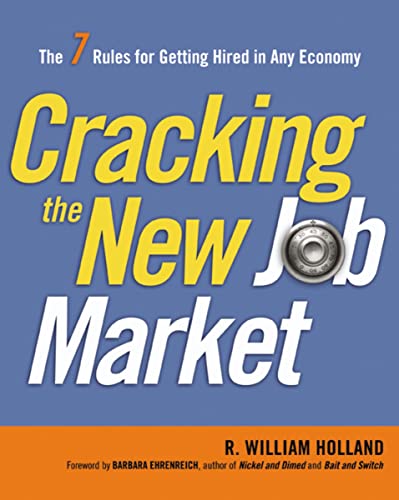
Full description not available
E**M
Good effort, no new breakthroughs
Based on the Amazon reviews, I picked up this book. As I read into the book, I began to skim more and more. The material is not very deep and I only came away with a few nuggets of relatively new info.If this is a top level view into the job search world, you could do worse.Whether this book addresses the 'new job market' is questionable, since it seemed as if this info was stale the moment it was printed.
P**O
New rules for job seekers
Cracking the New Job Market is a must read for every student in high school and college and their parents and grandparents. I found it to be insightful and accurate regarding the challenge faced by students and graduates facing a changed job market where the old rules won't help them. Thank you Dr. Holland for shortening the learning curve in job seeking for this generation and their families.
J**N
Find a Different Book
No new information. Look for a better book.
D**N
Better than most
It's impossible for anyone to write a perfect job search guide. Holland's is one of the better ones I've come across.If you are searching for a new job, I'd recommend reading this guide and then talking to insiders in your industry to learn more about what they're really expecting.On the plus side:Holland gives a good discussion of writing a resume. He talks about adding value; this style is the same that many consultants (including me) have been promoting for years. The idea is to show accomplishments, not just list "tasks" (a word I think should be abolished from resumes when you target positions above the clerical level).Holland also does a very good job of discussing places to seek opportunities, an overview of social media (you'll need to get more in-depth info but he gives you a good start), and a summary of how to dress and prepare for an interview. In particular, he points out that job candidates may need to dress more formally than employees of the company. They wear jeans but you probably shouldn't.On the downside, a lot of his advice seems to be straight party line. It's not especially new or revolutionary: just put together in a readable, convenient package. The only major disagreement I have concerns cover letters. I recommend writing cover letters to answer the items in the ad directly, point by point.I had trouble relating to the section on college students. For one thing, I don't think it's possible to be an expert on careers in all fields and all phases. Entry level career planning is totally different from midlife career planning. I also know many college students with liberal arts backgrounds who have enjoyed successful careers in major corporations. People skills are more important than just about anything. I'd also recommend encouraging college students to work hard and choose demanding professors so they will build their skills, especially in writing and speaking.Not surprisingly I also thought the section on returning to school at mid-career was not helpful. The idea at that stage is to network among fellow students. Learning a new skill via the classroom may or may not be helpful to getting a new job. And the section on financial planning should have been omitted: the advice is basic. Ultimately, if you're at the age discrimination stage, you need to think about working for yourself if you don't want to settle.Finally, I was surprised to see a functional resume at the back of the book. Consistently I've seen employers who are leery of these resumes.Holland is certainly qualified to write this book, but may be too well qualified. He's away from the trenches and grass roots, and his background comes from HR - a department may job seekers try to avoid if at all possible.
N**S
7 Tips on How to Stand Out in a Competitve Job Market
There are many books which offer advice on job search strategies, but a few tips stand out in R. William Holland's offering. In the first few chapters, he advises us to closely examine the job description for the positions we apply for, then to highlight the parts of our background that are most relevant in the cover letter and resume we submit. Seems like simple advice, but many job hunters don't do this, then complain about how difficult it is to get interviews. He also offers reassurance that it's 'not our fault' when jobs end prematurely and we're forced to scramble to land a new gig.If you're not yet convinced of the value of social media, there's a chapter that explains how sites such as LinkedIn, Facebook and Twitter can give you an advantage over traditional search methods. There's also the expected offerings on interviewing and negotiation, although much of these tips were already familiar to me.Interestingly, Holland's claim that 'Career Choice Is More Than Following Your Passion' may be unsettling to those of us who have been advised differently in books such as What Color Is My Parachute. But it does provide some food for thought that having a strong interest in a profession doesn't always guarantee career success.In today's challenging job market, the old methods of job search no longer work. Especially for those who are suddenly thrust into unemployment for the first time in a long while, Holland's book provides some worthwhile advice on how to 'demonstrate value' to attract potential employers.
C**S
Fabulous Resource for Today's Job Seekers
Once upon a time, in a land where jobs were plentiful and loyalty was rewarded, finding a job was easier. You typed up an attractive resume that listed your skills and responsibilities, you went on an interview or two, obtained a job offer, and happily worked at that company for many years--if not for the rest of your employed life.As Holland's book indicates, the new job market doesn't resemble this model at all. Employers aren't as concerned with college degrees and former job titles. They want to know what value you can create for them in the future. Today's job seekers don't expect to stay within the same company or in the same position for more than a few years. And employers don't expect they will either. Social media has nearly replaced networking groups.Holland uses his years of experience in human resources to offer sound advice for today's job seekers. His conversational, inspiring style will be much appreciated. While every chapter is a winner in this book, the 7 Rules are complemented by helpful Appendices that discuss how to encourage value creation in your children, how to financially plan for new career realities, how to apply the rules to worldwide employment, and an example of a functional resume.Job seekers everywhere need to pick up a copy of this book!I received a free copy of this book from the publisher. This review contains my honest opinions, for which I received no compensation of any kind.
Trustpilot
2 days ago
3 days ago
3 weeks ago
3 weeks ago